Blinds

Timber blinds for warm natural texture.

A classic blind style for filtered light, privacy and natural warmth.

Practical guide

Timber blinds for warm texture and precise light control.

Timber blinds, often specified as timber or timber-look Venetians, use horizontal slats that tilt for light and privacy. They bring warmer texture than aluminium blinds and suit rooms where you want adjustable daylight without a full fabric treatment.

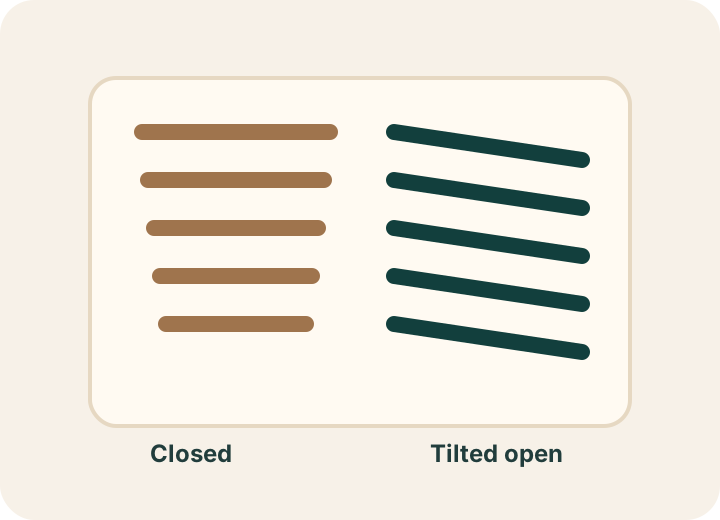
Illustration of timber blind slats tilted open and closed.
Slat tilt

How do timber blinds control privacy?

The slats tilt through the day. You can angle them to bounce light upward, screen the room from outside or close them further for stronger privacy at night.

  • Tilt open for daylight while reducing direct glare.
  • Tilt closed for privacy on street-facing windows.
  • Raise the blind fully when you want the glass clear.
  • Slat width affects the view line and the overall look.
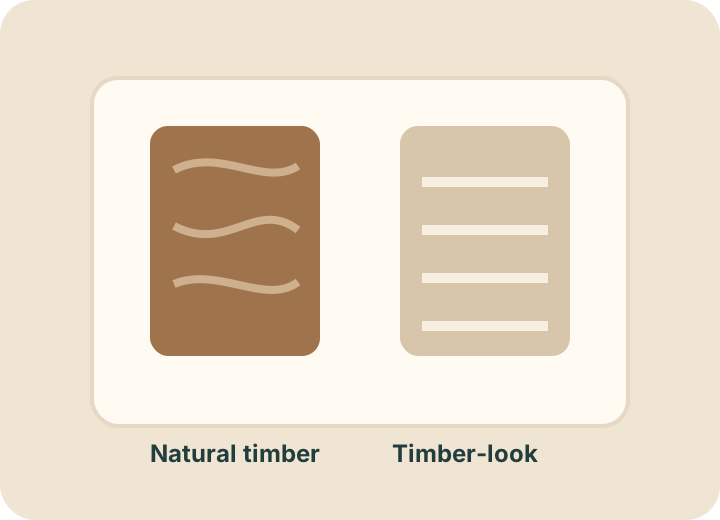
Illustration comparing natural timber and timber-look blind slats.
Material choice

Should you choose timber or timber-look?

Natural timber gives warmth and character, while timber-look materials can be more practical where moisture, heat or easy cleaning matter. The right choice depends on room conditions and the finish you want.

  • Natural timber suits living areas, bedrooms and studies.
  • Timber-look options can be useful in kitchens, laundries or humid spots.
  • Colour and grain should be checked against flooring, trims and cabinetry.
  • Weight matters on larger windows, so measuring confirms suitability.
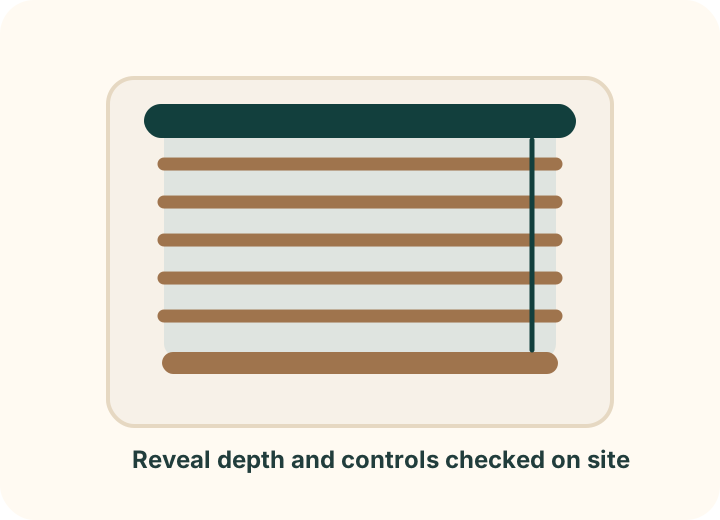
Illustration of a timber blind with headrail, slats and bottom rail fitted inside a window.
Fit details

What makes timber blinds look properly finished?

A good timber blind fit comes down to the reveal, headrail, slat stack and control side. The measure confirms whether the blind should sit inside the frame or face-fit for better coverage.

  • Recess fit gives a built-in look where frame depth allows.
  • Face fit can improve coverage on shallow or uneven openings.
  • Controls are placed for daily reach and child-safety requirements.
  • Installation checks tilt, lift and bottom rail alignment.
At a glance

What homeowners usually want to know first.

Timber blinds are about adjustable light, texture and finish. The key choices are real timber or timber-look, slat width, colour, ladder style, mount position and whether the window size suits the blind weight.

Best suited to Living rooms, bedrooms, studies, dining rooms and feature windows needing warmer texture.
Main properties Tilt control, privacy, filtered light, natural warmth and a classic Venetian look.
Window sizes Best confirmed by measure because large blinds can become heavy depending on material and slat width.
Controls Tilt and lift controls, with options depending on the selected product system.
Common upgrades Decorative tapes, valances, timber-look materials, coordinated colours and motorised tilt where available.
How it works

From material choice to a clean fitted finish.

Book a Free Measure
  1. Book a free measure so the team can check depth, size, moisture exposure and room finish.
  2. Choose timber or timber-look material, slat colour, slat width and control side.
  3. Receive a written quote, then the blinds are made to size and installed with operation checks.
FAQ

Common questions.

Are timber blinds good for privacy?

Yes. Tilting the slats gives flexible privacy during the day and stronger screening at night, though small light lines are normal between slats.

Are timber blinds suitable for wet areas?

Natural timber is not always the best choice for humid or wet rooms. A timber-look material may be more practical depending on the space.

Do timber blinds block heat?

They can help manage light and radiant heat inside the room, especially when closed during bright sun, but external shading blocks heat before it reaches the glass.

Can timber blinds be made for large windows?

Often, but size and weight need to be checked. Larger openings may need multiple blinds for easier lifting and better long-term operation.

Should timber blinds sit inside the reveal?

Recess fit looks neat when there is enough depth. Face fit may be better for shallow frames, uneven openings or stronger coverage.

Ready to talk?

Free measure and quote. No obligation.

We come to your home across Mandurah, Rockingham, Bunbury and Perth, measure properly and provide a written quote.